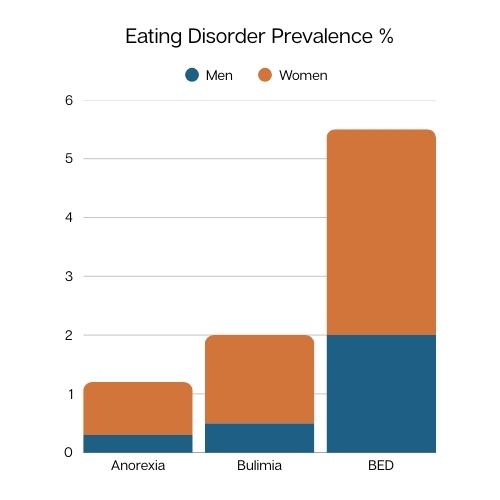
For every one person who develops anorexia, there are roughly three to four people who will develop binge eating disorder. Despite being the most common eating disorder, BED often receives less public attention and awareness compared to anorexia and bulimia.
If you experience recurrent episodes of eating large amounts of food and feel unable to stop, you are not alone. This is the core experience of binge eating disorder (BED), the most common eating disorder in the United States.
BED is not a lack of willpower or a personal failing. It is a complex condition shaped by biology, brain function, and life experience. Diet culture and family history can play a part, but they are never the sole cause.
BED can affect your well-being, and it is treatable. With the right support, many people stop binge eating and build a steadier relationship with food. Sessions are available in person and online.
Signs and Symptoms of Binge Eating Disorder
Binge eating disorder looks different from person to person. These are common signs, grouped by type.
Physical
Behavioral
Emotional
- Weight changes, including weight gain. People of any body size can have BED.
- Stomach cramps, bloating, acid reflux, and other digestive problems
- Feeling tired or sluggish, and trouble sleeping
- Difficulty concentrating
- Over time, health concerns associated with weight gain, such as type 2 diabetes, high blood pressure, high cholesterol, heart disease, sleep apnea, and joint and muscle pain
- Eating an unusually large amount of food in a short period, such as within two hours
- Feeling out of control during a binge, or unable to stop
- Eating much more rapidly than usual
- Eating in secret or alone because of embarrassment or shame
- Hiding or hoarding food
- Eating until uncomfortably or painfully full
- Continuing to eat when not physically hungry
- Frequent or repeated dieting, often without lasting weight loss
- Developing food rituals or avoiding meals with others
- Withdrawing from friends, family, and social activities
- Intense guilt, shame, or disgust after a binge
- Significant distress about the eating behavior
- Feeling numb or “zoned out” during a binge, as if on autopilot
- Low self-esteem and body image that depends heavily on shape and weight
- Depression, anxiety, or feelings of worthlessness
- Tension or anxiety that eases only with eating
- Mood swings and irritability
- Isolation and loneliness
Learn More About Binge Eating Disorder
This video from the Stanford Center for Health Education explains binge eating disorder and how it affects the body and mind.

Binge Eating Disorder Treatment
Healing from binge eating disorder means building steadier habits with food, more trust in your body, and new ways to cope with stress and difficult emotions. Like other eating disorders, BED responds best to evidence-based care that supports you as a whole person. Treatment draws on approaches such as cognitive behavioral therapy (CBT) and coordinates with a dietitian and medical provider when needed.
Recovery often begins with nutrition and behavior. It may seem counterintuitive, but one of the first steps is not restriction. It is eating consistently. Binge eating is often the body’s response to not getting enough food regularly. Working together to build in three meals and snacks each day helps break the binge-restrict cycle and lays the groundwork for a calmer and healthier relationship with food.
What to Expect
Initial Consultation
We talk through your concerns and what you hope to change, and answer your questions about how treatment works.
Assessment
Your clinician reviews your eating patterns, health history, and any co-occurring concerns.
Treatment Plan
Together we set goals and decide who should be involved, such as a dietitian or medical provider.
Ongoing Review
We review progress regularly and adjust the plan as your needs change.
Care That Connects Across Specialties
Binge eating disorder often overlaps with other concerns, and our clinicians coordinate care when it does.
- Bulimia Therapy: binge-purge cycles and related health concerns
- Anorexia Therapy: restriction and fear of weight gain
- OSFED: eating disorders that don’t fit one category
- Body Image Concerns: distress about weight and shape
- Family-Based Treatment: parent-led recovery for teens
- Anxiety & OCD Therapy: anxiety and rigid thinking
- Adult Therapy: depression, stress, and related concerns
- Couples Therapy: support for partners during recovery