Bulimia nervosa, or just bulimia, is an eating disorder with two main parts. It involves episodes of bingeing, where a person eats a lot of food at once, followed by purging, which are harmful actions to get rid of the food. Purging can take many forms, including vomiting, exercising compulsively, or misusing laxatives. Many people with bulimia are at a typical weight, so it can be hard to spot from the outside. Sessions are available in person and online.
Bulimia is not about vanity or a lifestyle choice. It is a complex condition resulting from a combination of genetic, biological, and psychological factors. While environmental pressures like diet culture and social media can be contributing factors, they are never the sole cause. Bulimia develops from a unique convergence of influences.
Bulimia can have serious short- and long-term health effects, some of them life-threatening, but recovery is possible with the right support.
Bulimia can be hard to spot from the outside, and signs can show up in the body, in behavior, and in how a person feels.
Some physical signs, such as fainting, chest pain, or a very fast or irregular heartbeat, need prompt medical attention.
Physical Symptoms
Behavioral Symptoms
Emotional Symptoms
The cycle of bingeing and purging places significant strain on the body, leading to a wide range of physical symptoms. These can include:
Weight Fluctuations: Noticeable changes in weight, both up and down.
Dental Issues: Stained, discolored, or decaying teeth due to erosion from stomach acid.
Swelling: Noticeable swelling in the jaw and cheek area (salivary glands).
Hand Calluses: Calluses or scars on the back of the hands and knuckles from self-induced vomiting (Russell's sign).
Gastrointestinal Distress: Chronic sore throat, indigestion, heartburn, acid reflux, constipation, or other intestinal issues.
Dehydration and Fatigue: Feeling tired, weak, or dizzy due to electrolyte imbalances.
Menstrual Irregularities: Loss of or irregular menstrual periods in females.
Broken Blood Vessels: Broken blood vessels in the eyes.
The behaviors associated with bulimia are often secretive and driven by a desire to control weight and appearance. Key behavioral signs include:
Binge Eating: Repeatedly eating unusually large amounts of food in a short period, often in secret.
Purging: Engaging in compensatory behaviors to "get rid of" the food consumed during a binge. This can include:
Self-induced vomiting
Misuse of laxatives, diuretics, or enemas
Compulsive or excessive exercise
Fasting or severe calorie restriction between binges
Bathroom Habits: Frequently going to the bathroom immediately after meals or for long periods.
Food Rituals: Hiding food, avoiding social situations involving meals, or developing unusual eating habits.
Dieting: Strict dieting or fasting, often following an episode of binge eating.
Excessive Focus on Body: A preoccupation with body weight and shape, including frequent weighing and checking one's appearance in the mirror.
The emotional and psychological toll of bulimia is significant and often at the core of the disorder. These symptoms include:
Intense Fear of Gaining Weight: An overwhelming and persistent fear of putting on weight.
Poor Body Image and Low Self-Esteem: A distorted and negative perception of one's body, with self-worth being heavily tied to body shape and weight.
Feelings of Guilt and Shame: Experiencing intense guilt, shame, and disgust, particularly after a binge-eating episode.
Sense of Lack of Control: Feeling a loss of control during binge-eating episodes.
Mood Swings and Irritability: Experiencing extreme mood swings, anxiety, depression, and irritability.
Social Withdrawal: Isolating from friends and family and avoiding previously enjoyed activities, especially those involving food.
Preoccupation with Food: Obsessive thoughts about food, calories, and dieting.
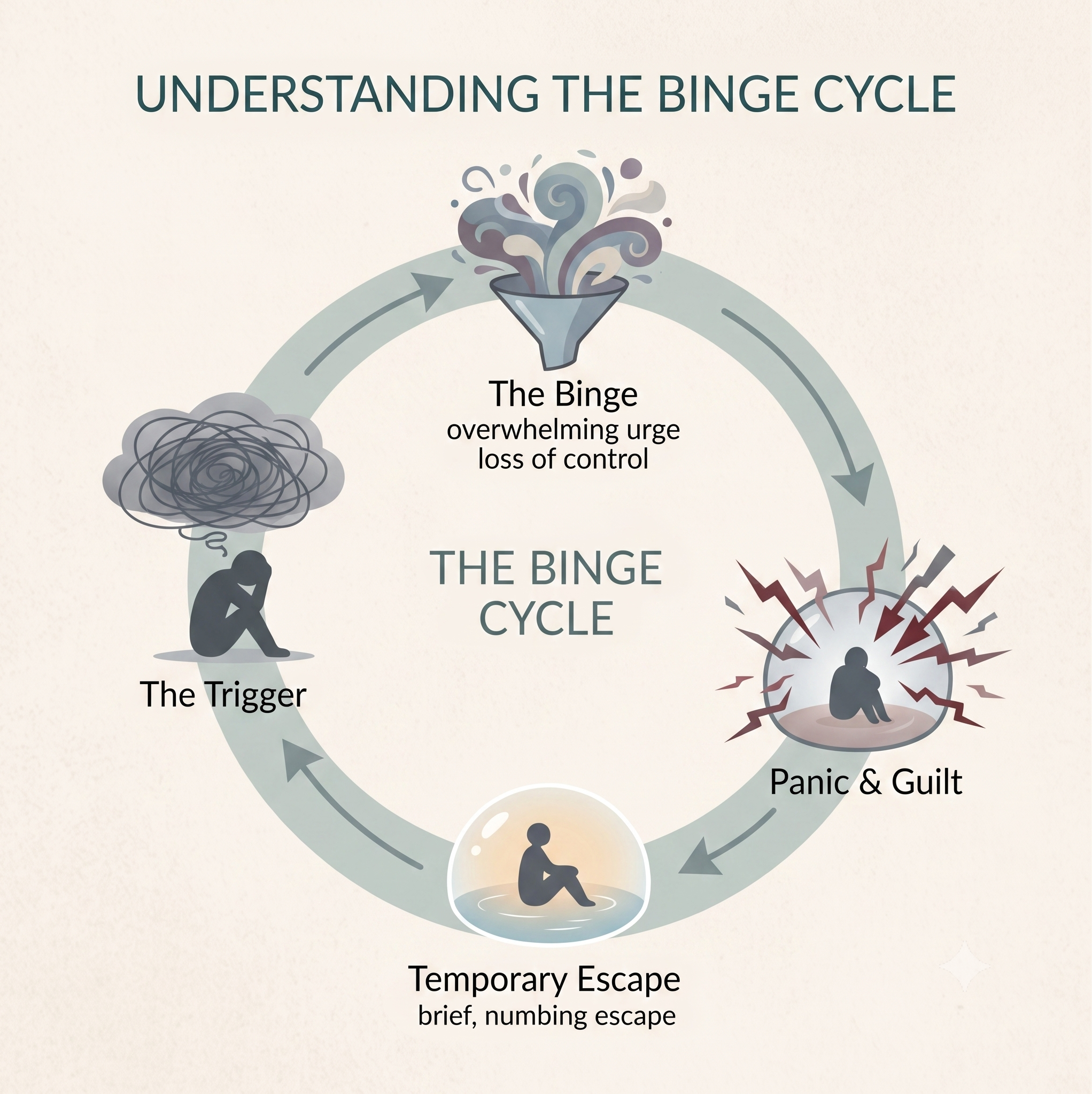
How the Binge-Purge Cycle Works
The Binge Cycle
The Trigger: Emotional distress and restrictive dieting create an intense, overwhelming urge to binge.
The Binge: A large amount of food is consumed very quickly, with a complete and distressing loss of control.
Temporary Escape: The binge provides a brief, numbing escape from the painful emotions that triggered it but only for a moment.
The Switch to Panic: The escape gives way to intense guilt and panic about weight gain, which directly triggers the purge cycle.
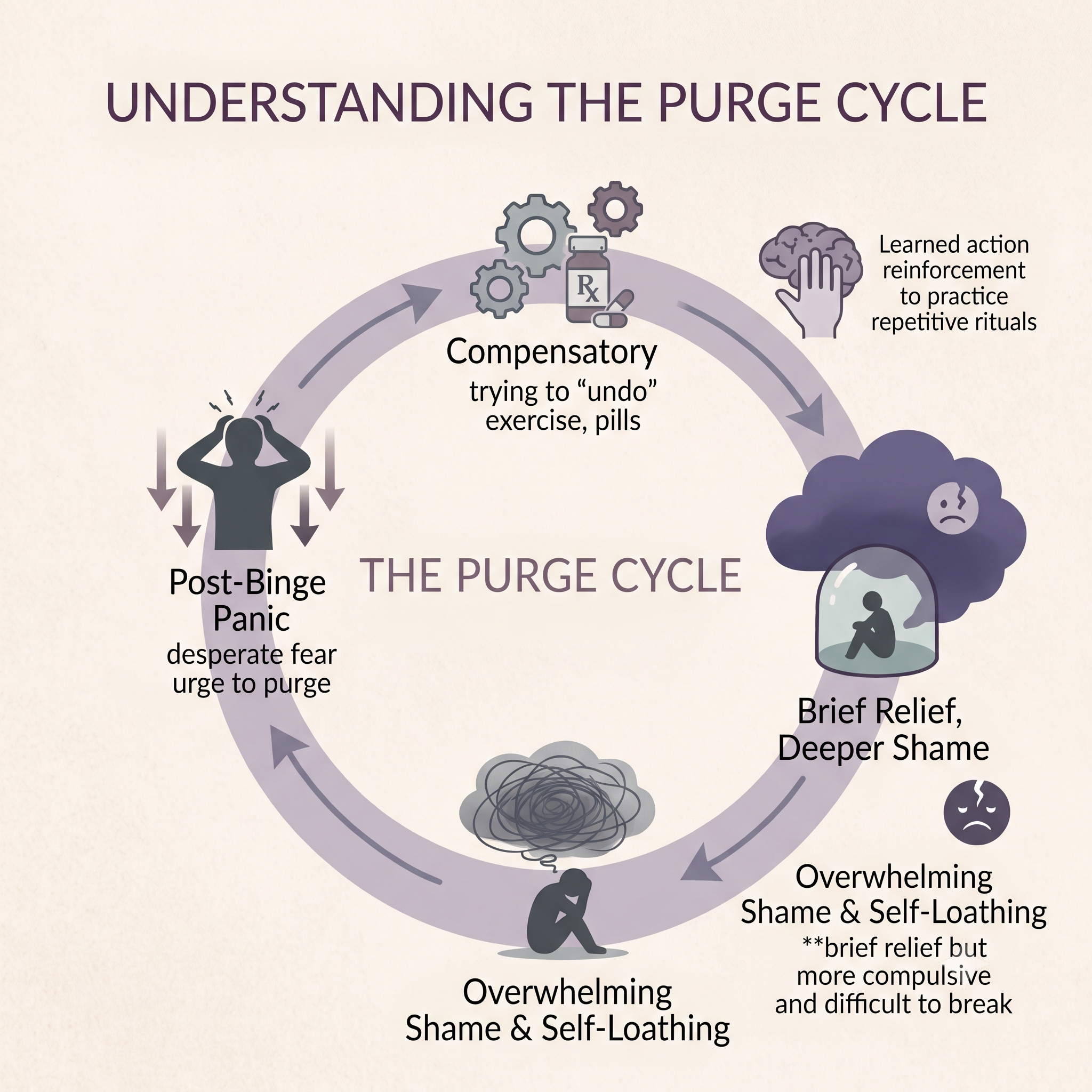
The Purge Cycle
Post-Binge Panic: After a binge, intense panic, guilt, and a desperate fear of weight gain trigger the urge to purge.
Compensatory Actions: The person tries to "undo" the binge through purging behaviors like self-induced vomiting, misusing laxatives, fasting, or compulsive exercise.
Brief Relief, Deeper Shame: Purging provides a moment of relief from anxiety, but it's quickly replaced by overwhelming feelings of shame and self-loathing.
Strengthening the Cycle: This temporary relief reinforces purging as a coping mechanism, making the cycle more compulsive and difficult to break over time.
Learn More About Bulimia
This video from the Stanford Center for Health Education explains bulimia nervosa and how it affects the body and mind.
Health Risks of Untreated Bulimia
Repeated bingeing and purging can affect nearly every part of the body. Many of these effects improve with treatment, and some need prompt medical care.
Heart and circulation: Purging can deplete minerals such as potassium, sodium, and magnesium, which can cause an irregular heartbeat, low blood pressure, and fainting. In severe cases it can lead to cardiac arrest.
Digestive system: Frequent vomiting can cause acid reflux, inflammation or tearing of the esophagus, stomach pain, and bloating. Laxative misuse can lead to chronic constipation and damage to the colon.
Teeth and mouth: Stomach acid wears away tooth enamel and can cause decay, sensitivity, gum disease, mouth sores, and swollen salivary glands.
Kidneys and hydration: Chronic dehydration and electrolyte imbalances strain the kidneys and can cause fatigue and muscle weakness.
Hormones and reproductive health: Menstrual cycles can become irregular or stop, and fertility and pregnancy can be affected.
Mental health: Bulimia is closely linked with depression, anxiety, shame, and a higher risk of self-harm and suicidal thoughts. Substance use is also more common alongside it.
Bulimia Treatment
For anyone beginning treatment for bulimia, the first steps are to stabilize the body and change behaviors. This means working toward regular eating habits, reducing harmful actions, and addressing any nutrition or medical concerns. These foundational steps are essential, because psychological progress is hard to make while the cycle of bingeing and purging continues.
A holistic approach brings together a team that includes a therapist, dietitian, and medical doctor. A treatment plan might also include group therapy, medication management, or other supportive elements. For teens, parents often take part through Family-Based Treatment.
What to Expect
Initial Consultation
You tell us about your concerns, and we talk through next steps.
Assessment
We learn about eating, health history, and safety, and may ask for a medical evaluation.
Treatment Plan
We agree on goals, who will be involved, and how often to meet.
Ongoing Review
We check progress regularly and discuss whether a higher level of care is needed.
Care That Connects Across Specialties
Bulimia often overlaps with other concerns, and our clinicians coordinate care when it does.
Bulimia nervosa is an eating disorder involving repeated episodes of bingeing, followed by behaviors meant to get rid of the food, such as vomiting, misusing laxatives, fasting, or exercising compulsively. It affects people of all ages, genders, and backgrounds.
Can someone have bulimia and be at a typical weight?
Yes. Many people with bulimia are at a typical weight, which is one reason it can go unnoticed. The behaviors and the distress around them are what matter, not body size.
What does bulimia treatment involve?
Treatment usually focuses first on regular eating and reducing bingeing and purging, along with therapy for the thoughts and feelings that drive the cycle. Care is coordinated among a therapist, a dietitian, and a medical doctor, and it is tailored to the person’s age and needs.
Is Family-Based Treatment used for bulimia?
Yes. An adapted form of Family-Based Treatment is used for adolescents with bulimia, with parents and caregivers taking an active role in interrupting bingeing and purging. Adults are often treated with individual therapy, such as cognitive behavioral approaches.
What are the health risks of bulimia?
Repeated purging can cause electrolyte imbalances that affect the heart, along with digestive problems, tooth and gum damage, dehydration, and changes to menstrual cycles. Many of these effects improve with treatment, and a medical provider can check for problems that need attention.
When is a higher level of care needed?
Outpatient therapy is not enough for everyone. If a person has fainting, chest pain, an irregular heartbeat, or electrolyte problems, they may need medical care first. We work with your medical provider and help you find the right setting.
What if I feel too ashamed to talk about it?
Shame is a very common part of bulimia, and it is often what keeps people from asking for help. These are conversations our clinicians have regularly, and you can go at your own pace.
Do you offer bulimia treatment online?
Yes. Sessions are available in person at our Chappaqua and Hartsdale offices and by secure video.
What if there is an emergency?
PPG provides outpatient care and is not an emergency service. If you are having thoughts of harming yourself, call or text 988, the Suicide & Crisis Lifeline, at any time. If you or someone you care about has chest pain, fainting, a very fast or irregular heartbeat, or trouble breathing, or you are in immediate danger, call 911. For eating disorder information, support, and referrals, you can also call the National Alliance for Eating Disorders helpline at 866-662-1235, Monday through Friday, 9 a.m. to 7 p.m. Eastern Time.